
What is an Electrical Pigtail? Pigtail Wiring Explained
The short answer: an electrical pigtail helps one device connect to a group of wires without crowding all of those wires onto the device itself.
An electrical pigtail is an electrical technique that connects multiple devices to one outlet, switch, fixture, or grounding point. Instead of trying to crowd several wires onto one terminal, the pigtail creates a single, cleaner connection point.
If you opened an outlet or switch box and saw a short extra wire tucked inside, it can look confusing at first, especially when several wires meet in one small electrical box.
Electrical Pigtail at a Glance
Question | Quick Answer |
|---|---|
What is a pigtail in electrical wiring? | A short wire that connects a group of wires to an outlet, switch, fixture, metal box, or grounding point. |
What is an electrical pigtail used for? | It is often used for grounding, device replacement, outlet wiring, switch wiring, and situations where one device needs a cleaner connection to several wires. |
Is pigtail wiring a DIY job? | It can be risky if you are not comfortable turning off power, testing wires, matching wire sizes, and making secure connections. |
When should you call an electrician? | Call if wiring looks damaged, the outlet feels warm, breakers trip, the box is crowded, or you are unsure what any wire does. |
What Electrical Pigtails Are Used For
A pigtail is usually used when one device needs to connect to more than one wire in an electrical box. You may see pigtail wiring behind outlets, switches, light fixtures, GFCI outlets, and metal electrical boxes that need grounding.
The pigtail acts like a short bridge. It connects the device to a group of wires without forcing all of those wires onto the device itself.
Common uses include:
Connecting an outlet to multiple wires in the same box
Grounding a switch or receptacle
Connecting a light fixture to circuit wires
Extending a wire that is too short to reach the device comfortably
Keeping wiring more manageable inside an electrical box
How Does an Electric Pigtail Work?
An Electrical Pigtail is usually not a standalone project and is often used to make other electrical replacements or repairs. The pigtail works like a short bridge. The matching wires are joined together with the pigtail, and the free end of that pigtail connects to the outlet, switch, fixture, or grounding screw.
For example, you can employ the electrical pigtail when grounding a receptacle or switch, where the green grounding pigtails link the device and metal box to the circuit grounding wires.
Another way to use an electrical pigtail is to connect the hot wires leading to the light fixtures and the screw terminal using a short black pigtail wire. This is to get a wall switch to control more light fixtures.
The NEC (National Electric Code) has a pigtail wire length requirement of 6 inches long.
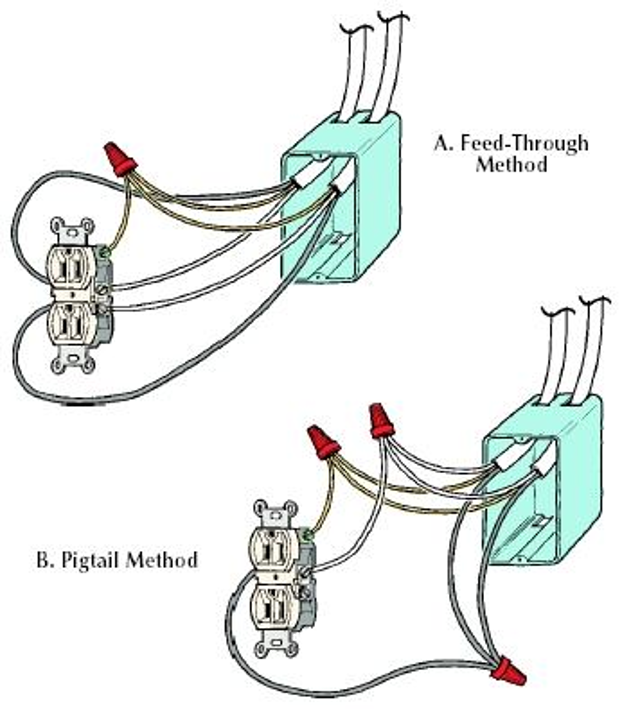
How Pigtail Wiring Connects
Part | What It Does | Why It Matters |
|---|---|---|
Circuit wires | Carry power, neutral, or ground through the electrical box. | These wires are already part of the circuit and should not be mixed up. |
Pigtail wire | Creates the short connection between the wire group and the device. | It gives the outlet, switch, fixture, or box one clear connection point. |
Wire connector | Joins the pigtail to the matching wires. | The connection needs to be secure and properly matched for the wires being joined. |
Device or grounding point | Receives the free end of the pigtail. | This is where the completed connection serves the outlet, switch, fixture, or grounding path. |
How to Wire an Electrical Pigtail
It is ideal to learn to make a pigtail on your own when you need to. Here’s how to make an electrical pigtail.
Tools/Materials Required:
Screwdriver
Scrap wire pieces
Wire cutter
Circuit tester
Needle-nose pliers
Wire connectors (push-fit connectors or traditional wire nuts)
Safety Checks Before You Begin
Safety Check | Why It Matters |
|---|---|
Power was turned off and tested | A circuit can still be live if the wrong breaker was switched off. |
Wire type and size match the circuit | The wrong wire can create overheating or performance concerns. |
Connector is secure | Loose wiring can lead to heat, arcing, or device failure. |
No bare copper is exposed outside the connector | Exposed wire can create shock or short-circuit risks. |
The electrical box is not overcrowded | Crowded boxes can make wiring harder to secure safely. |
Electrical work is one of those home projects where guessing can get dangerous quickly. The Electrical Safety Foundation International recommends turning off power at the breaker before working on a circuit and avoiding DIY electrical projects that are beyond your skill level.
If you are not fully comfortable testing wires and confirming the circuit is off, it is safer to call a professional. At YES!, we are licensed electrical professionals. Book an appointment with us in Utah today.
Steps to Wire an Electrical Pigtail
Start by shutting off power. Turning off the circuit power is a safety precaution that should not be taken lightly. Do this first, and use a circuit tester to verify that the power is truly shut off.
Go ahead and start on the pigtail wire. Begin by cutting the scrap wires 6-8 inches long, with wire cutters. Using a wire stripper, strip ¾ inch insulation from all the wires.
Using the needle-nose pliers, loop one end of bare wire from the pigtail around the device’s screw terminal in a clockwise direction. Tighten the terminal to keep the wire loop secure. Check that the loop fits perfectly around the screw shaft, having no exposed wires.
The other bare end should be connected to the circuit wire with a wire connector. Also check that it fits tightly, with no exposed copper; you can tug lightly to confirm.
Thread the grounding screw connected to the pigtail until it becomes a threaded screw that opens in the back of the electrical box. The pigtail’s free end will attach with a wire connector to other grounding wires.
Round off your work, check that all the wire connections have been made. Tuck the wires into the electrical box and then secure the device to the box. Don’t forget to mount the cover plate.
Turn the power back on and test that it all works perfectly.
When Pigtail Wiring Should Be Handled by an Electrician
If this seems a little too advanced for you, or you’re too busy to pull this off, you can hire an electrician to make things easy for you. A pigtail may be a short wire, but it is still part of your home’s electrical system. If something looks off, smells hot, feels warm, or keeps tripping a breaker, do not keep testing it yourself. The CPSC advises homeowners to pay attention to warm or hot outlets and switches because they can signal trouble.
Call for electrical help if:
You are not sure which breaker controls the circuit
The outlet, switch, or cover plate feels warm
You see scorch marks, sparks, or melted plastic
The breaker trips after the device is used
The wires are brittle, damaged, or too short
The electrical box looks overcrowded
You are working near a GFCI outlet or water source
The wire colors or connections do not match what you expected
The NFPA notes that electrical failures or malfunctions are a major contributor to home electrical fires, so wiring concerns are worth taking seriously, even when the repair looks small.
Live in Utah? Call YES! Today!
For electrical wiring questions in Utah, YES! can help you understand what is happening behind the outlet, switch, or fixture without leaving you to guess on your own. Our team can help with electrical service, GFCI outlets, panel upgrades, and house rewiring when your home needs a closer look.
Schedule electrical service in Utah or call YES! at 844-216-9300.